
2025 has been a wonderful and engaging year for the Humanities department. As a College, we continue to develop our students understanding of people, places, societies and systems. The Humanities department continues to provide a diverse range of subjects that encourage curiosity, critical thinking, and a deeper appreciation of the world in which we live. It really is the all-rounder of departments!
HISTORY
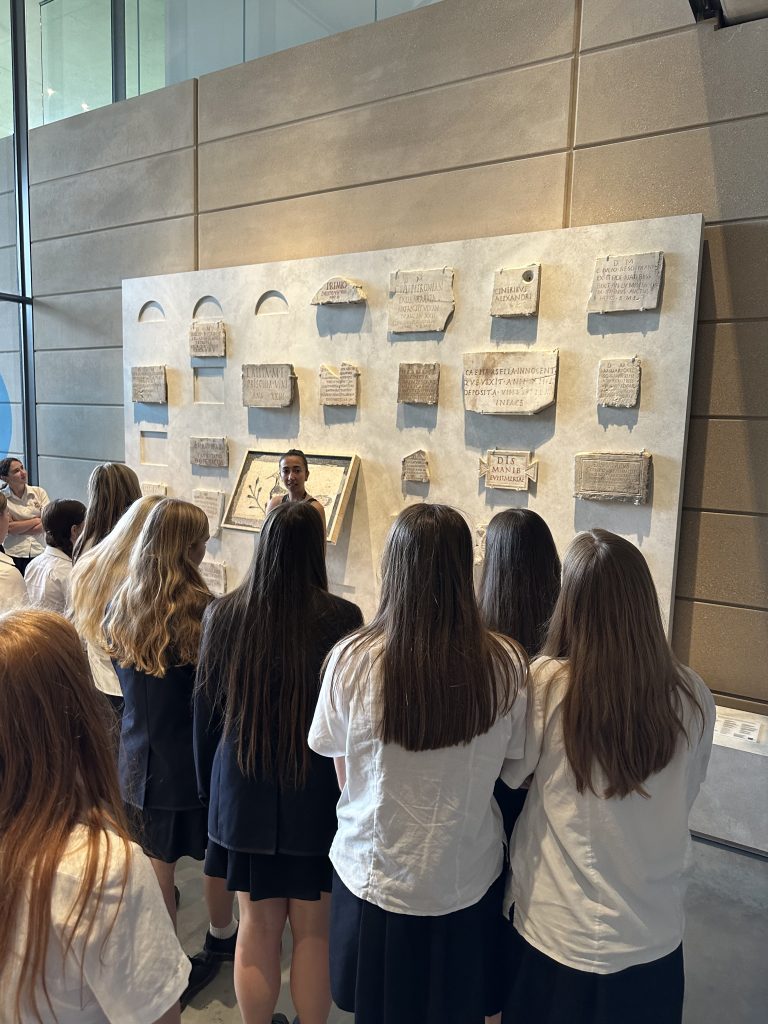
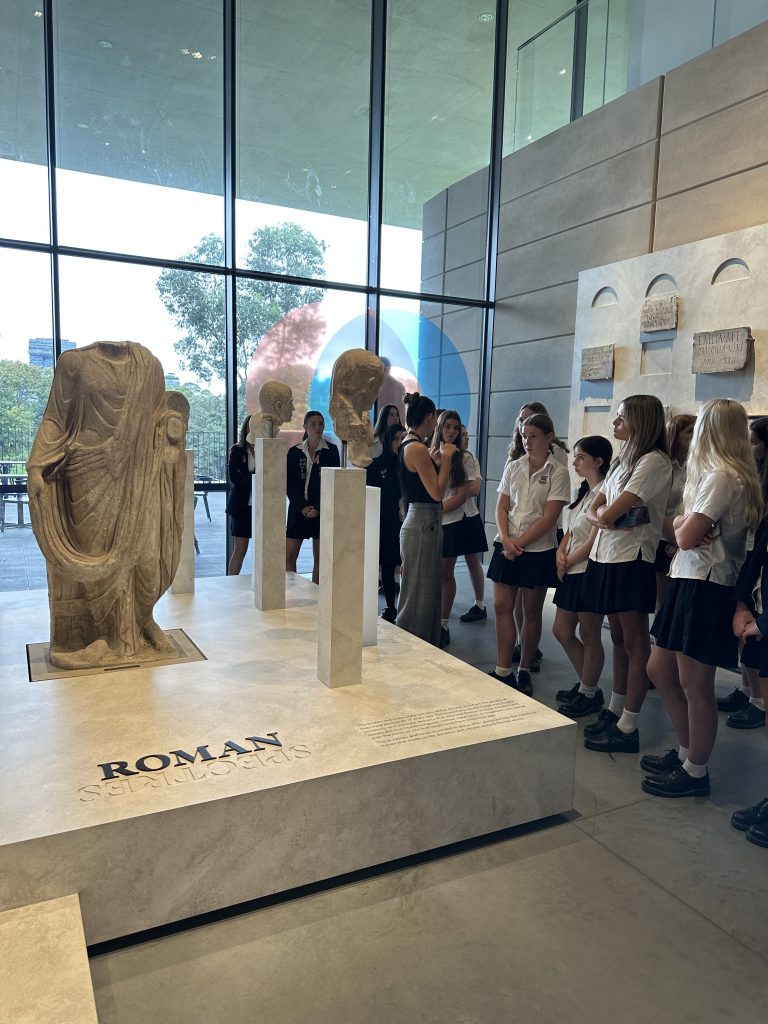
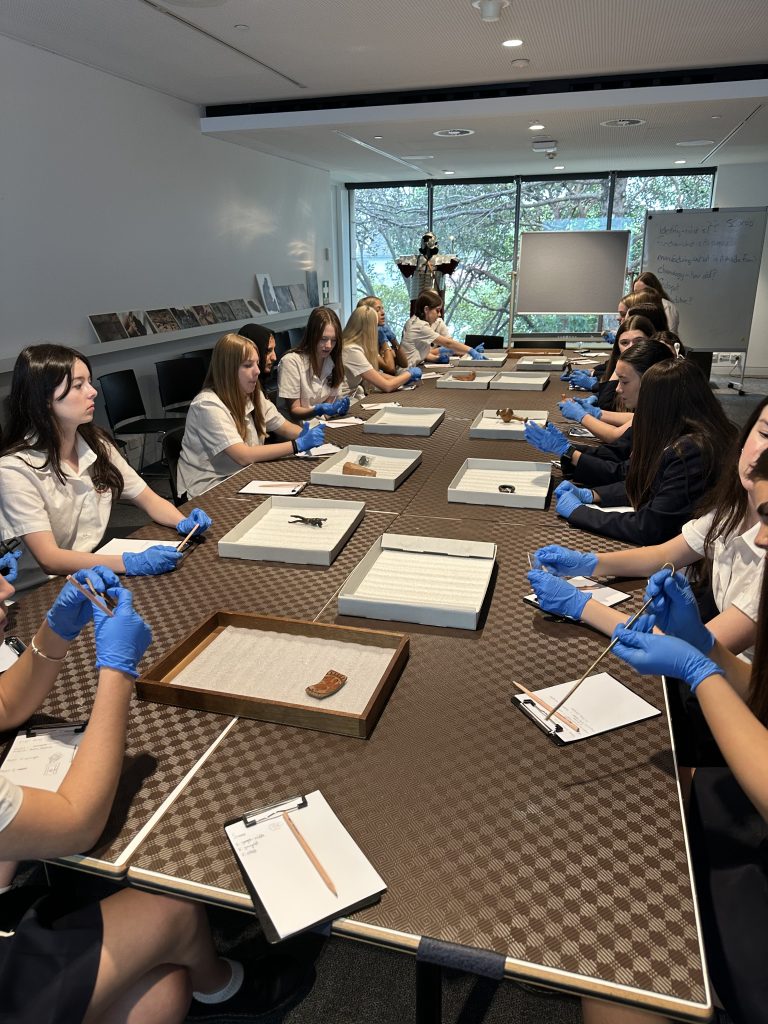
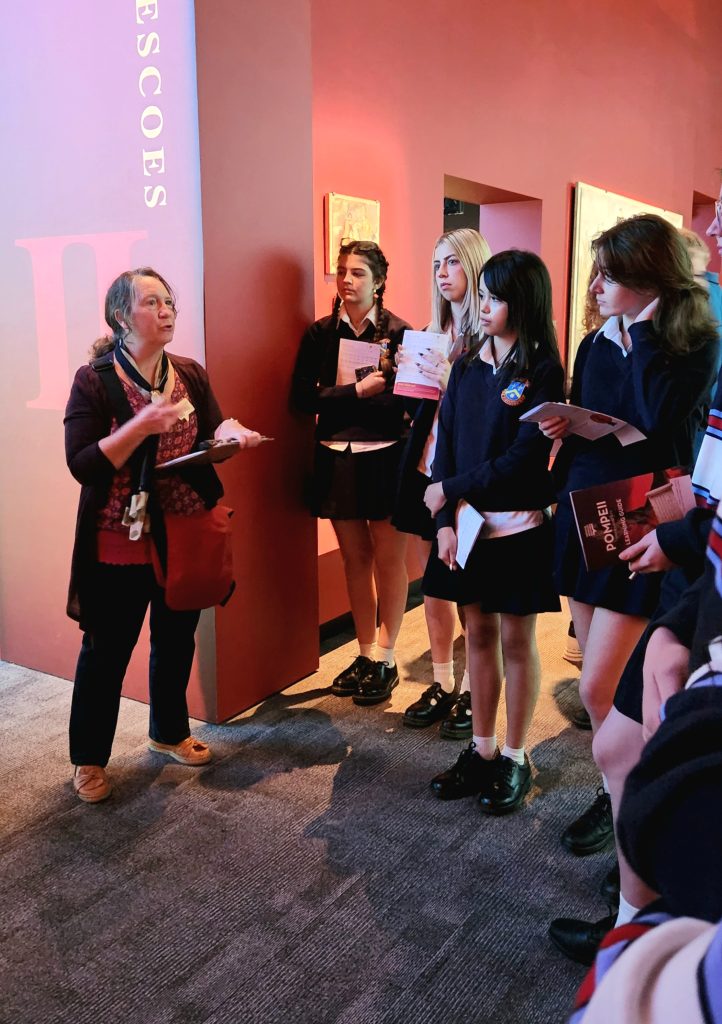
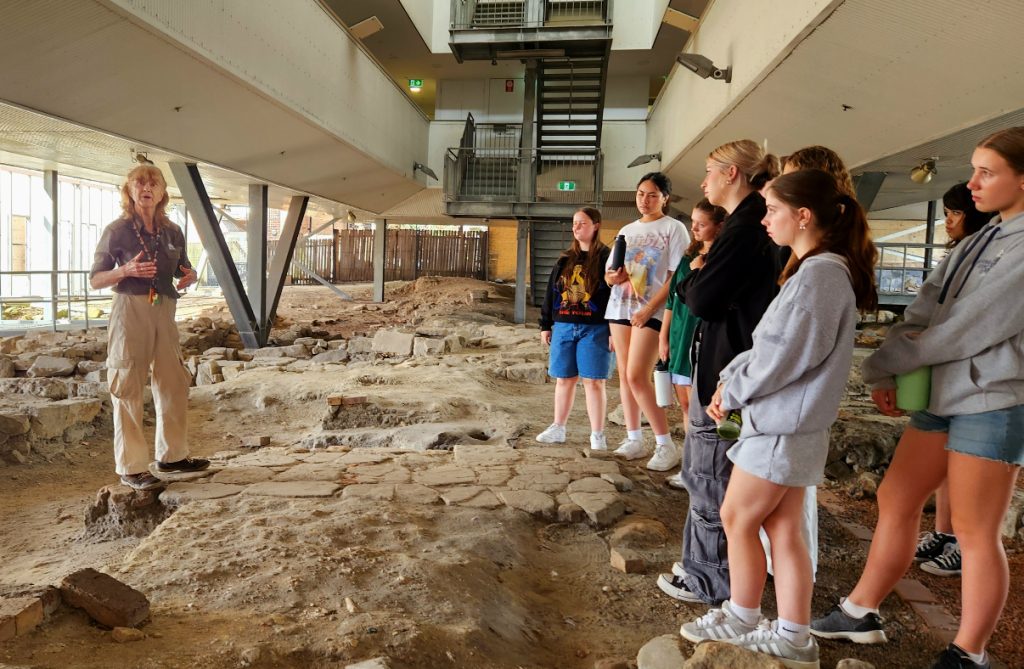
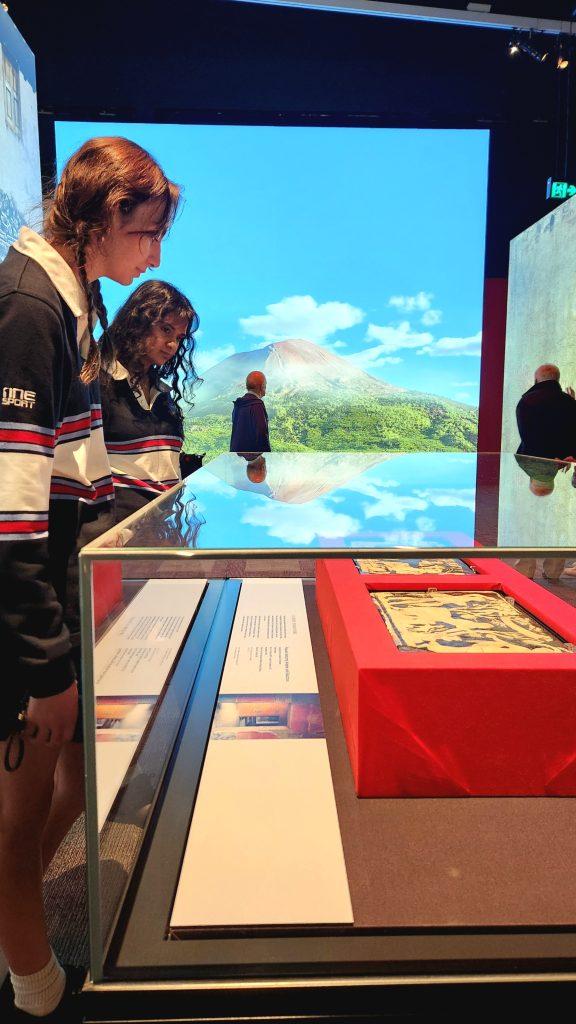
History in Years 7–12 has given students the chance to step back in time and explore the stories, people, and events that have shaped our world. From the ancient past to the modern era, students have examined how societies developed, the challenges they faced, and the legacies they left behind. They have engaged with fascinating topics such as ancient civilisations, medieval societies, global exploration, revolutions, and the world wars. A number of engaging excursions and incursions helped deepen students’ understanding of historical events and artefacts. Year 10 students once again enjoyed the stage play “Vietnam Dusted Off”, by Brett Hunt. The play is based on Mr Hunt’s family’s experience of the Vietnam War. Senior Ancient and Modern History students also enjoyed a trip to Sydney to the Sydney Jewish Museum, the Chau Chak Wing Museum, a Walking History tour of The Rocks and attended the Archaeology School at The Rocks. Senior Ancient History students also explored the Pompeii Exhibition at the National Museum of Australia. Many students in Years 7-10 participated in the annual Australian History Competition, entered the National History Challenge or were selected to submit entries to the Simpson Prize competition. Year 8 students also embraced the Medieval History day in Term 4, immersing themselves in the events and experiences of the Middle Ages, including writing, maypole dancing and games and dress ups.
GEOGRAPHY
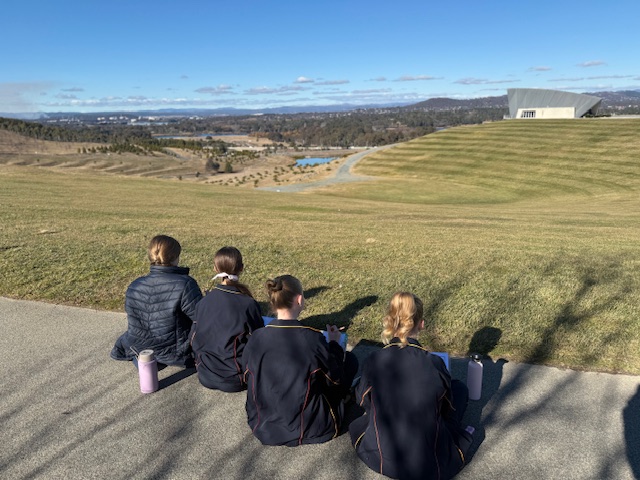
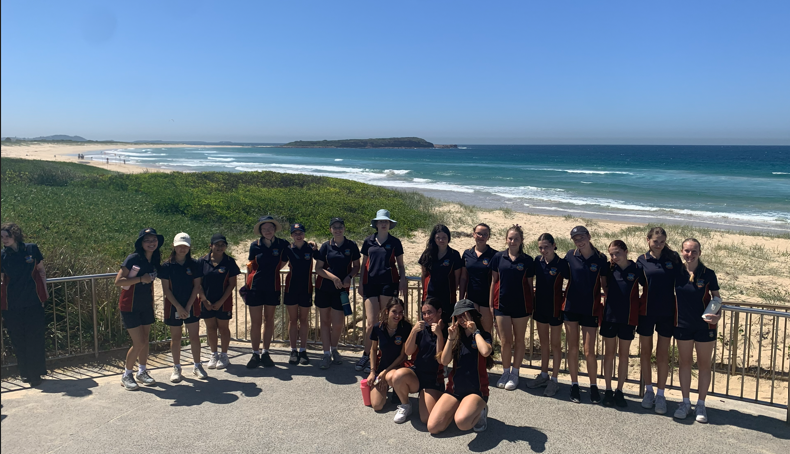
Geography in 2025 has taken the students on a journey to explore the world around them, from some of our local environments to more wider scale global challenges. Year 7 Integrated Humanities students used practical skills to explore the Canberra water system by heading the Cotter Dam to engage in Interdisciplinary learning with Science. Year 8 Geography students enjoyed an adventure to the Arboretum to engage in field sketching. Our Year 10 Geography classes had a day trip to Shellharbour to do some practical fieldwork at the coast, whilst investigating sustainability and the impact of humans on the environment.
CIVICS & CITIZENSHIP AND LEGAL STUDIES
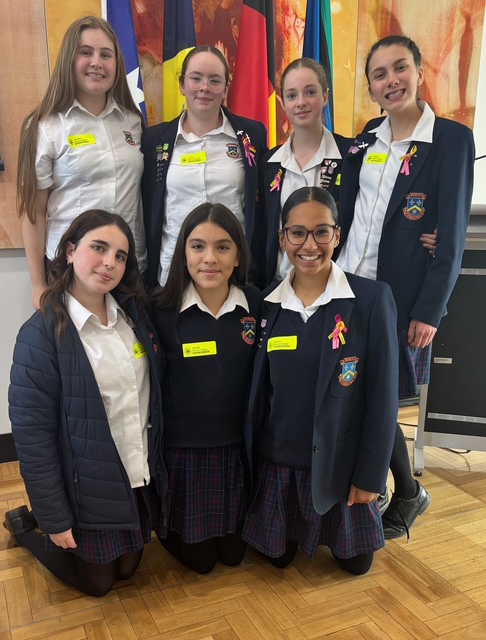
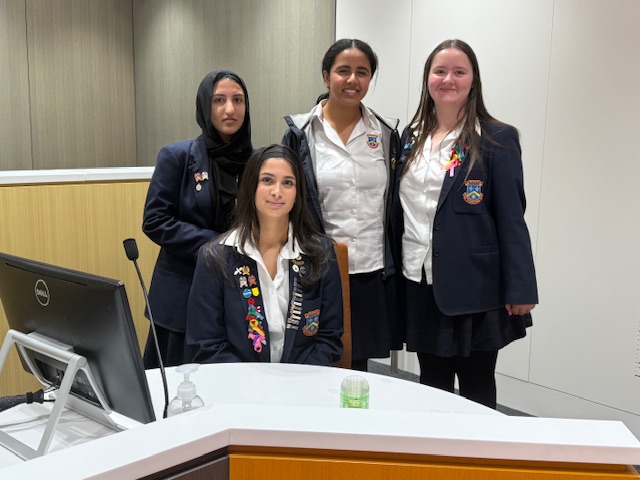
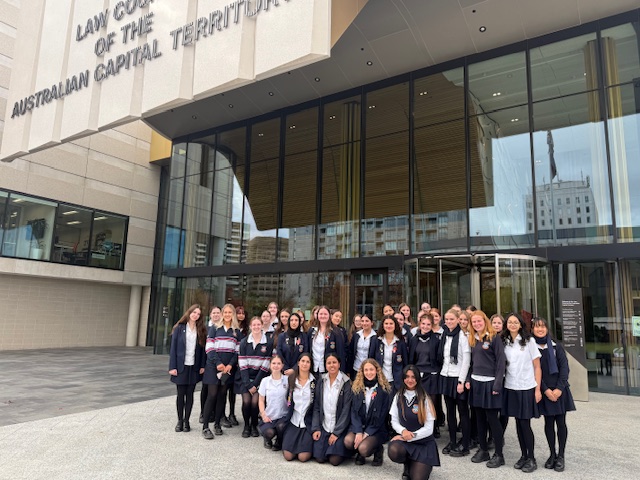
Throughout the year, students were able to explore how democracy works and the role that they can play in helping shape society. Many students engaged in debates, model UN campaigns and discussions to explore the importance of active citizenship and the influence of laws and the government on everyday life. A group of Year 8 students attended the annual Committee Challenge at the Legislative Assembly. They were able to critically analyse information, develop an understanding of a range of perspectives on a topic, build their own informed observations and opinions, and negotiate and seek compromise with others. Senior Legal Studies students attended the Magistrates Court where they observed real cases in action as well as the important role that courts play in upholding justice. Two senior students also represented Merici College at the National Model UN Assembly at the Museum of Australian Democracy. The joined teams from all over NSW, QLD and Victoria, by representing Germany.
Mrs. Kyla Firman
Humanities Coordinator
STUDENT EXPERIENCES
This year, we attended the National Model United Nations Assembly (MUNA), hosted by the Rotary Club of Canberra Sunrise. We found the experience to be a valuable insight into diplomacy as well as a great opportunity to engage in public speaking. Over the course of the two-day live-in camp, we discussed real United Nations resolutions on current global political issues with Year 10-12 students from across the country. We represented Germany and delivered speeches at Old Parliament House on our country’s stance on a range of globally relevant topics. Participating in MUNA allowed us to form connections and friendships with other students who share our passions for social justice and public speaking. Attending MUNA was an inspiring glimpse into diplomacy, leadership, and collaboration. – Madeleine and Jodie, Year 11
During the Geography excursion at Warilla Beach in term 3, we learnt how coastal processes affect the beach and urban development in the area. We were able to identify multiple strategies which were put in place to reduce the impact erosion and longshore drift have on houses and the beach from our previous classwork, while learning about the pros and cons of different management strategies and coastal effects. During the excursion, we walked around the beach, documenting vegetation succession, beach morphology, longshore drift and sand sampling which were all shared with the class once we got back to Merici. We were able to assess the effect different management strategies have on stakeholders, and how they could be implemented differently or better to reduce certain effects on the beach and in urban development. Overall, it was a good day in the sun, and although the wind was very heavy, it was a memorable and fun experience! – Annabelle and Mili, Year 10 Geography
The Senior History Excursion was a fantastic opportunity for students to expand their knowledge on Museum curation and visit notable historical sites. We left for Sydney bright and early, making our first stop at the Sydney Jewish Museum. Following a brief tour, we had an insightful discussion with a survivor of the Holocaust. After a short lunch, we then headed off to the Chau Chak Wing Museum in which we got to hold and analyse historic items in their collection. The day was finished off with a walking ghost tour that gave insight into the unknown and supernatural side of Sydney’s past. The next morning, we completed the Groundwork Program, ending our excursion by practicing our OPVL skills with a variety of provided artefacts. – Makeila Tapelu, Year 11 Ancient History