

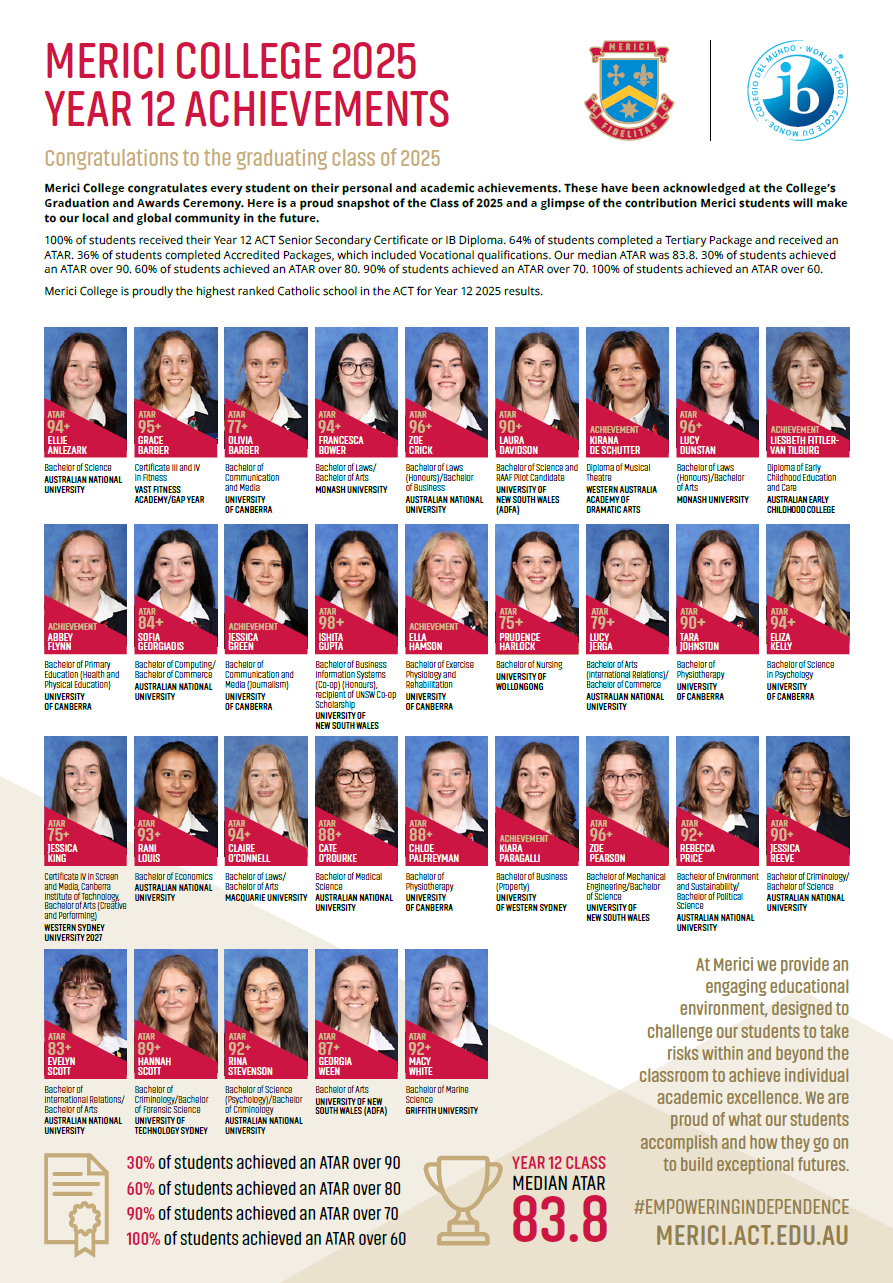
Merici College congratulates every graduate on their personal and academic achievements for 2025. 100% of students received their Year 12 ACT Senior Secondary Certificate or IB Diploma.
64% of students completed a Tertiary Package and received an ATAR. 36% of students completed Accredited Packages, which included Vocational qualifications. Our median ATAR was 83.8. 30% of students achieved an ATAR over 90. 60% of students achieved an ATAR over 80. 90% of students achieved an ATAR over 70. 100% of students achieved an ATAR over 60.
Merici College is proudly the highest ranked Catholic school in the ACT for Year 12 2025 results, fourth year in row.
Please read the full Destinations Report found 2026 Destinations Report.
This report is focused on the Year 12 Graduating Class of 2025. The data was obtained from a Destinations Survey sent out to all students in December – mid January, after the January round of offers for university placement.
This report is focussed on the Year 12 Graduating Class of 2025. The data was obtained from a Destinations Survey sent out to all students in December and completed after the early February round of offers for university placement.
The student survey related to:
- Plans for 2026 – categorised into: further study, full time employment or a Gap year
- Plans for 2027- if taking a Gap year
- Type of study
- Institution of study
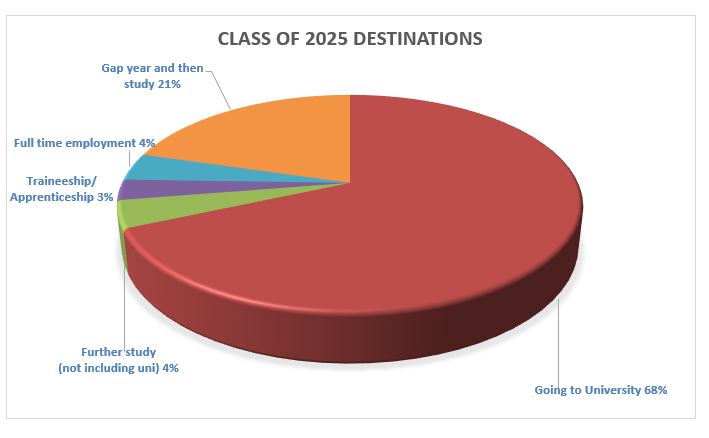
The destinations of our 2025 Year 12 cohort show a strong shift toward higher education, with 68% of students choosing to proceed directly to university, an increase of 5% from the previous year. The proportion of students taking a Gap Year has remained relatively stable, while the percentage entering full‑time employment without further study has declined to just 4%.
Of the young women who completed Year 12 at Merici College in 2025, 96% will continue in some form of recognised education and training in the year immediately following school, or upon return from a Gap year. Approximately 72% will transition straight into further study, including university and TAFE pathways. A further 21% have opted to take a Gap Year.
Full‑time employment accounts for 4% of the cohort, with students entering fields such as hospitality, the Australian Public Service, and professional sport. Additionally, 3% of students are continuing apprenticeships, predominantly in hairdressing and childcare.
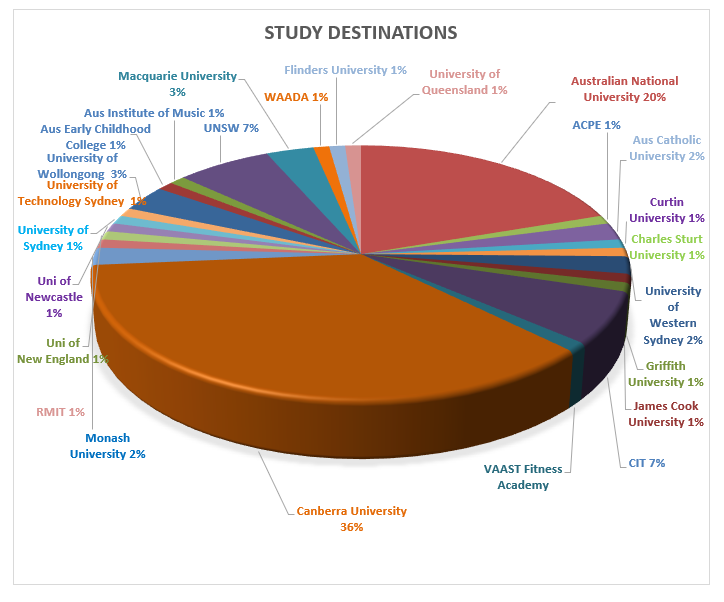
There has been a slight decline in the percentage of students choosing to study interstate, with 32% in 2026/27. These students have elected to study at a broad range of institutions across Australia, including the University of New South Wales, University of Wollongong, University of Newcastle, University of Sydney, University of Technology Sydney, RMIT, Monash University, University of Queensland, Curtin University, Charles Sturt University, Macquarie University, Australian Institute of Music, Flinders University, WAADA, ACPE, James Cook University, Griffith University, and the University of New England.
The proportion of students studying locally at the Australian National University (20%) and the University of Canberra (36%) have remained relatively stable. Enrolments at the Australian Catholic University have decreased to 2%, while there has been an increase in students pursuing TAFE qualifications, particularly at the Canberra Institute of Technology. Additionally, 2% of students have enrolled in the Defence Force through ADFA.
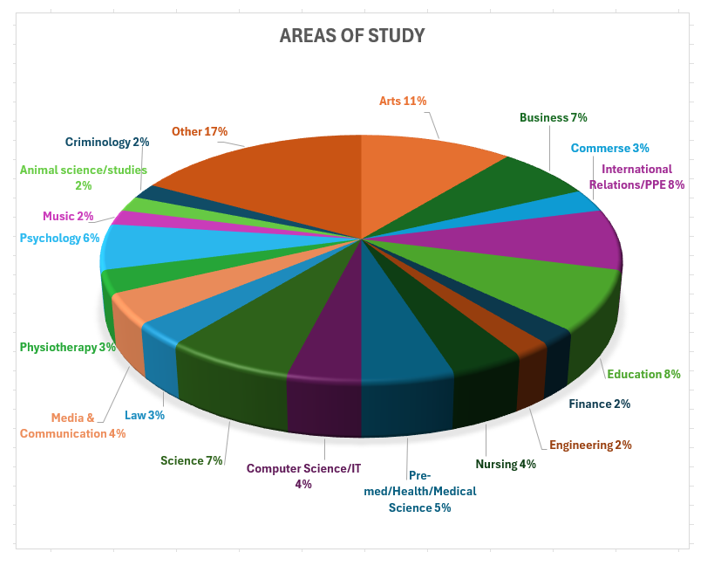
The graph Area of Study includes both single and double degrees. Eleven students have chosen to undertake a double degree in 2025 or 2026, down from 15 last year.
Approximately 11% of students are studying an Arts degree, often in combination with another degree. Twelve percent of students enrolled at a tertiary institution are completing a business‑related degree, including Commerce and Finance, while International Relations/Politics, Philosophy and Economics continue to be popular choices at 8%.
The 17% of students studying Science and Medical Science–related courses have enrolled in a broad range of degrees, including Biomedical Science, Medical Imaging, Environmental Science, Criminology and Forensics, and Medical Science. A significant number have again chosen to combine Science with another degree.
The percentage of students choosing to study Early Childhood, Primary, or Secondary Education has increased to 8%, with the majority enrolling at the University of Canberra.
Nursing enrolments have declined, with only 4% of students entering this field. Psychology has maintained its popularity at 6% of all students, while only 2% and 3% have elected to study Engineering and Law, respectively.
The ‘Other’ category includes a diverse range of study areas such as Occupational Therapy, Nutrition, Fitness, Film Production, Construction, Dance, Exercise Physiology, and Marine Science.
Jackie Males
VET & Career Coordinator