


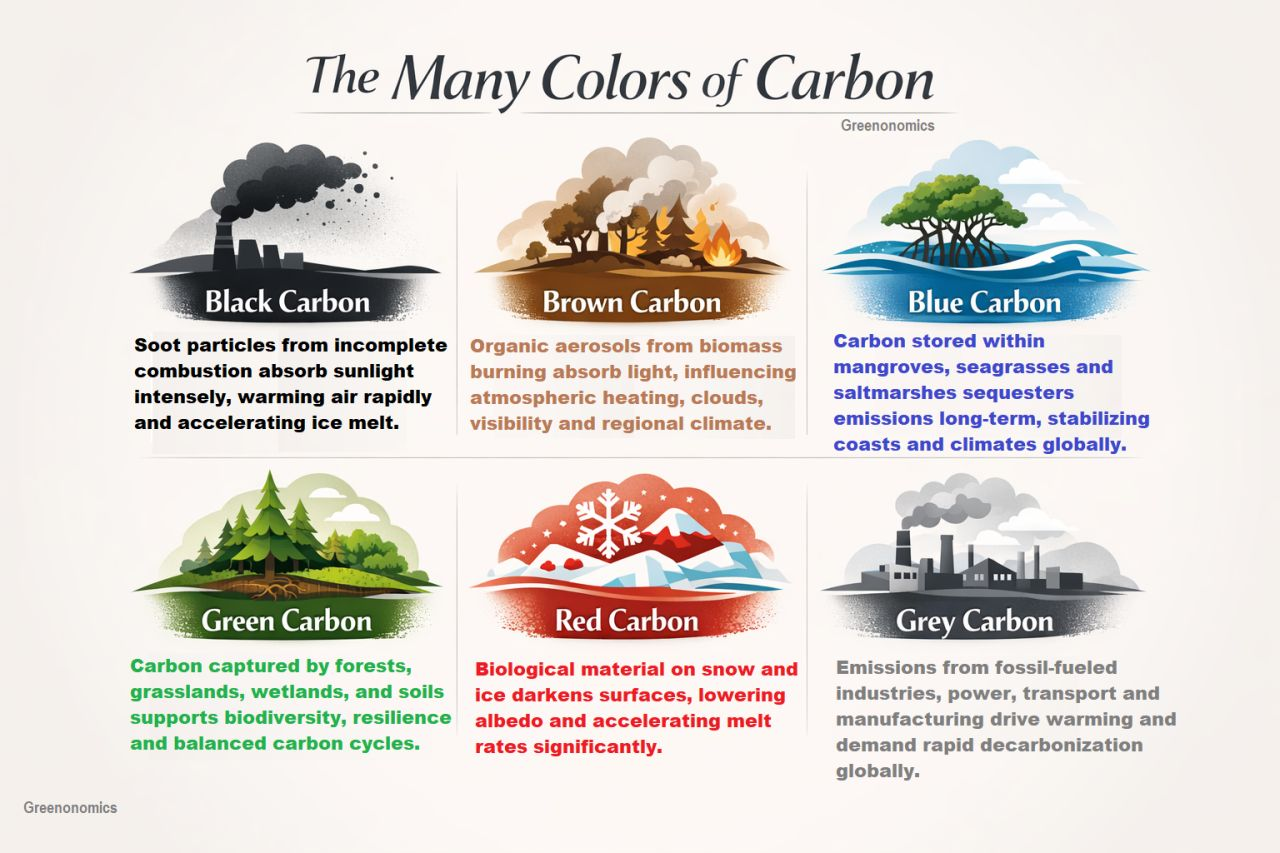
Not all carbon is the same—and understanding the difference is essential for building effective climate strategies.
When people hear the word carbon, they often think only of CO₂ emissions. But carbon exists in many forms, each playing a unique role in Earth’s climate system.
⚫ Black Carbon is soot from incomplete combustion that absorbs sunlight, accelerates warming, and speeds up the melting of snow and ice.
🟤 Brown Carbon comes primarily from biomass burning and influences atmospheric heating, cloud formation, air quality, and regional climate patterns.
🔵 Blue Carbon is captured and stored by coastal ecosystems such as mangroves, seagrasses, and salt marshes. These natural carbon sinks not only remove CO₂ from the atmosphere but also protect coastlines and support biodiversity.
🟢 Green Carbon is stored in forests, grasslands, wetlands, and healthy soils. Protecting and restoring these ecosystems strengthens biodiversity while enhancing long-term carbon sequestration.
🔴 Red Carbon refers to biological material on snow and ice that darkens their surfaces, reduces reflectivity (albedo), and accelerates melting—creating a powerful climate feedback loop.
⚪ Grey Carbon represents emissions from fossil fuel-based industries, power generation, transportation, and manufacturing, highlighting the urgent need for decarbonization.
A successful climate strategy isn’t just about reducing emissions. It’s about protecting natural carbon sinks, restoring ecosystems, improving land management, and accelerating the transition to a low-carbon economy.
Felicity Maher
Sustainability Officer