


Microplastics have become one of the most widespread forms of pollution on Earth.
These tiny plastic particles, often smaller than 5 millimeters, are now found in oceans, rivers, soil, air, and even the human body. While many people associate plastic pollution with bottles and bags, a large share of microplastics actually comes from everyday activities that often go unnoticed.
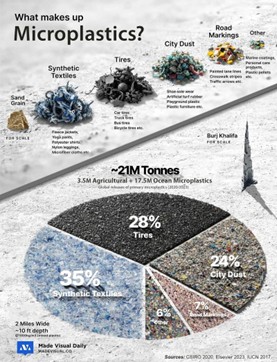
The largest contributor is synthetic textiles, responsible for about 35% of global microplastic releases. Clothes made from polyester, nylon, and other synthetic fibers shed microscopic threads during washing, which often pass through wastewater systems and enter natural ecosystems.
The second-largest source is tyre wear, accounting for roughly 28%. As vehicles move, friction between tires and roads releases tiny rubber and plastic particles that accumulate in urban environments and eventually wash into waterways.
City dust contributes another 24%, originating from the gradual breakdown of plastic-based materials such as shoe soles, artificial turf, playground equipment, and plastic furniture.
Smaller but still significant sources include road markings (7%), where painted lane lines and crosswalks degrade over time, and other plastic products (6%) such as marine coatings, personal care products, and industrial plastic pellets.
Globally, an estimated 21 million tonnes of primary microplastics are released into the environment each year. Once dispersed, these particles are extremely difficult to recover, making prevention the most effective solution.
A circular economy approach offers a pathway forward. Designing textiles that shed fewer fibers, developing durable tyre materials, improving urban filtration systems, and reducing reliance on synthetic plastics can help close the loop. By rethinking product design, materials, and waste management, the circular economy can play a critical role in tackling the invisible but growing microplastics crisis.
Source: The Circularity Hub, LinkedIn
Felicity Maher
Sustainability Officer